Can You Get Dental Implants With Bone Loss in Sugar Land, TX? Bone Grafting & Candidacy Explained

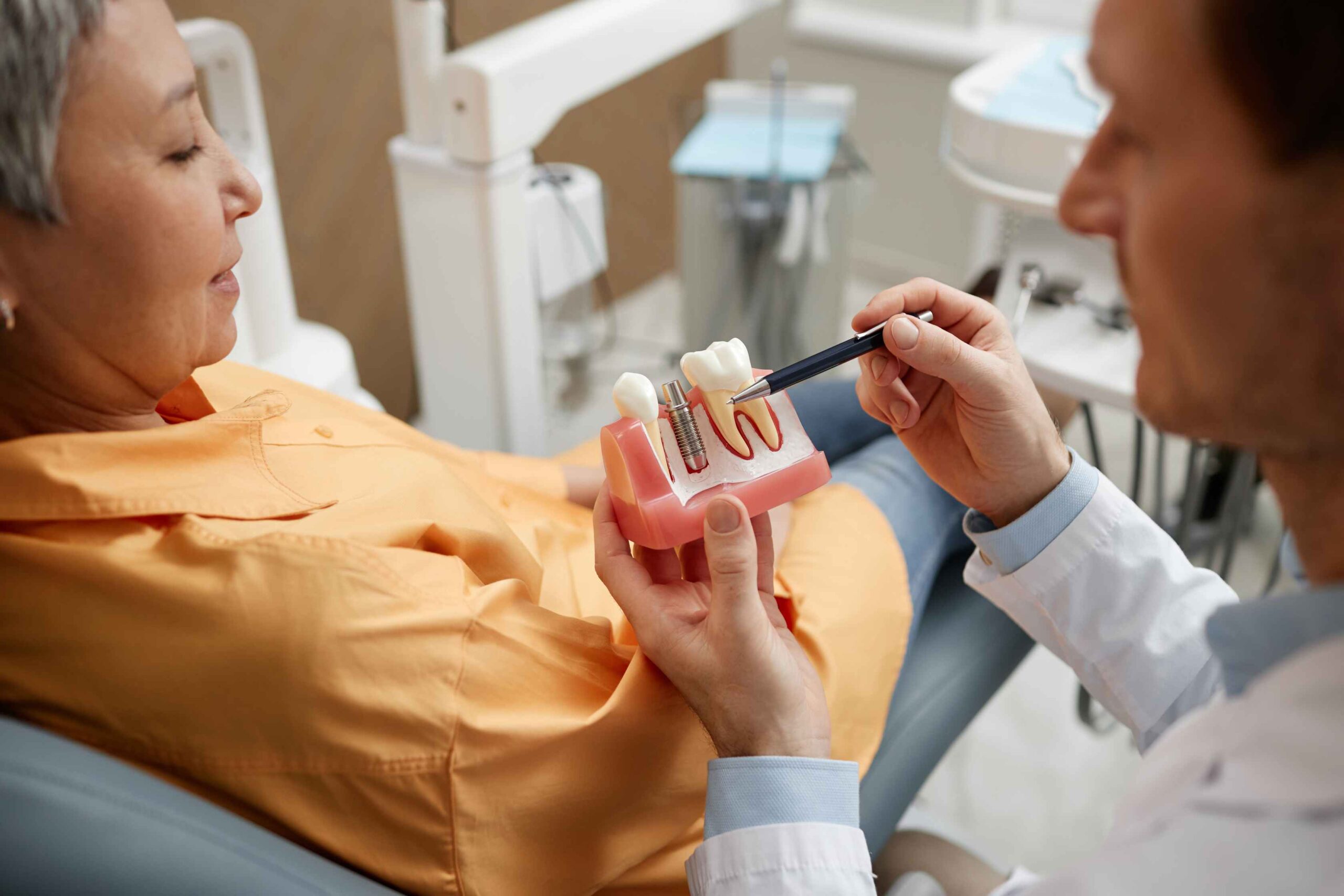
“You don’t have enough bone for implants.”
We hear about that sentence constantly. Someone got told it at another office, filed it away as a permanent no, and spent the next three years in a partial denture they never liked.
In 2026, that sentence almost never means what patients think it means. It usually means not enough bone today, which is a very different problem with a very well-studied solution.
But there’s a catch, and it involves a clock most people don’t know is running.
The 90-Day Clock
Here’s what surprises nearly everyone: jawbone loss after an extraction isn’t slow.
Research on post-extraction healing shows the alveolar ridge can lose up to 50% of its width within the first 12 months, and roughly two-thirds of that loss happens in the first three months. One systematic review measured an average of 3.87mm of horizontal bone loss inside 90 days. Six-month figures land at 11% to 22% vertical reduction and 29% to 63% horizontal.
The upper jaw goes faster than the lower.
So when someone tells us they’ll “deal with the implant later,” we gently push back. Later is not neutral. Later is the expensive version, because the bone that would have supported an implant for free is gone, and now it has to be rebuilt.
If you’re facing an extraction and think you might want an implant someday, say so before the tooth comes out. Socket preservation grafting at the time of extraction is dramatically cheaper than rebuilding later. In one comparison, preserved sites lost 0.71mm of ridge width versus 4.04mm for sockets left to heal on their own.
“Not Enough Bone” Is a Measurement, Not a Verdict
Implant candidacy comes down to how much bone height and width exist at a specific site, which a 3D scan answers in about ten minutes.
If the number falls short, the question shifts from whether to how much groundwork. Common options:
Socket preservation – grafting at the moment of extraction. Cheapest, easiest, most preventable step. Also the most commonly skipped.
Ridge augmentation – rebuilding width or height on a site that’s already resorbed. Typically four to six months of healing before implant placement.
Sinus lift – for upper back teeth, where the sinus floor drops as bone recedes. Adds height beneath the sinus.
Block grafting – for severe defects, using a block of bone secured to the deficient area.
Some cases allow the graft and implant in one appointment. Others need two stages. Your scan decides.
Do Implants in Grafted Bone Actually Hold Up?
Fair question, and the honest answer is the reason we recommend grafting confidently.
A systematic review of 6,913 implants placed in grafted maxillary sinuses across 2,046 patients found an overall survival rate of 91.49%, rising to 95.98% when bone substitute materials were used with modern rough-surface implants. A 15-year retrospective study following 757 implants reported 97.4% implant success where residual bone height was at least 4mm.
Most head-to-head comparisons find no statistically significant difference between implants in grafted bone and implants in native bone.
Now the part you should hear before you commit. Sinus membrane perforation occurs in roughly 20% to 25% of sinus lifts, though the research indicates it typically doesn’t compromise the outcome when managed properly. Grafting also means more appointments, more healing time, and more cost than a straightforward implant. Anyone who tells you otherwise is selling.
Why We See So Much of This in Fort Bend County
Two things converge here:
First, the numbers. Roughly 42% of U.S. adults over 30 have periodontal disease, and that climbs past 70% among adults 65 and older. Severe periodontitis remains the leading cause of adult tooth loss, and it destroys the bone around teeth long before the teeth come out.
Second, the neighborhoods. First Colony, Sweetwater, New Territory, and Greatwood were built in the 1980s and 90s. Many original residents are now squarely in the age bracket where periodontal bone loss peaks. We’re seeing the consequences of extractions performed twenty and thirty years ago, sometimes here, sometimes long before anyone moved to Texas.
Patients travel to us from Missouri City, Stafford, Richmond, Rosenberg, Meadows Place, Sienna, and Riverstone for one practical reason: we have a periodontist and an implant specialist under the same roof. You aren’t driving up 59 to one office for the graft and another for the implant while nobody owns the overall plan.
What Actually Happens at the Consultation
We scan, we measure, and we tell you the real number. If you’re a candidate today, we say so. If you need groundwork first, we explain exactly how much, how long, and what it costs before you commit to anything.
And if implants genuinely aren’t right for your situation, we’ll tell you that too.
Schedule a consultation at our Sugar Land office. You can also meet our doctors or read more about dental implants and oral surgery first.
Frequently Asked Questions (FAQ’s)
Can you get dental implants with bone loss?
Yes, most patients with bone loss can receive implants after bone grafting rebuilds enough height and width to support them.
How fast do you lose your jawbone after a tooth extraction?
The ridge can lose up to 50% of its width within 12 months, with about two-thirds of that loss occurring in the first three months.
Do dental implants in grafted bone last as long?
Yes, studies report survival rates around 91% to 97% for implants in grafted bone, with most research finding no significant difference from native bone.
How long does bone grafting take before you can get an implant?
Most bone grafts require four to six months of healing before implant placement, though some cases allow grafting and placement in one visit.
Is it too late to get an implant if my tooth was removed years ago?
No, teeth removed years or even decades ago can still be replaced with implants, though older sites more often require grafting first.