Should You See a Dentist If Your Teeth Hurt from Sweet Foods?


Have you ever taken a bite of dessert and felt a sudden sharp pain shoot through your teeth? When your teeth hurt from sweet foods, that sensitivity is more than an inconvenience. It is often your body trying to warn you that something is changing in your oral health.
Most people expect tooth sensitivity to show up with cold or hot drinks. Sensitivity to sugary foods can feel confusing, but it is actually one of the earliest signs of enamel changes, dentin exposure, or even a developing cavity. The pain may be brief, but it is never something to ignore.
In this blog, we will explain why sugar triggers tooth pain, what it means, and when it is time to see a dental professional.
Understanding Tooth Sensitivity to Sweet Foods
To understand why sweets sometimes cause that sharp sting, let’s take a quick look at what is inside a tooth.
The outer layer of a tooth is called enamel. It is the hardest substance in the body and protects the tooth like a shield. Beneath that enamel is dentin, a more sensitive layer filled with tiny microscopic tubules. These tubules connect directly to the nerve of the tooth. When enamel becomes thin, weak, or damaged, it no longer provides full protection to the dentin. This gives sugar an easy pathway to reach those tubules. Once sugar reaches the dentin, it quickly irritates the nerve, creating a sudden, sharp, or zinging sensation.
Sweet sensitivity is common, but it should not be considered normal. In most cases, it signals that part of the tooth has lost its natural protection. In simple terms, when sugar reaches an exposed part of the tooth, the nerve reacts.
What Causes Tooth Pain When Eating Sweets?
Here are the reasons we see most often when patients describe this symptom.
1. Enamel Erosion
Enamel can weaken or wear down from:
- Drinking a lot of acidic beverages like sodas or citrus-based drinks
- Brushing too hard or using a hard toothbrush
- Jaw clenching or grinding, which puts pressure on the enamel
When enamel thins, sweets can reach deeper layers of the tooth more easily.
2. Early Cavity Formation
Sugar feeds bacteria that naturally live in the mouth. When bacteria interact with sugar, they create acid that dissolves enamel. That process can lead to a cavity, even before anything is visible on the surface. If sweet foods cause pain in the same spot every time, this could be an early sign of a cavity developing.
3. Exposed Dentin
Dentin becomes exposed when enamel is worn down or damaged. It contains tiny pathways that go directly to the inner nerve. Sweet foods irritate these pathways, causing sharp pain.
4. Gum Recession
Gums naturally protect part of the tooth root. If gums begin to recede, that delicate area is exposed. Roots do not have protective enamel, so even small amounts of sugar can trigger significant sensitivity.
Common causes of recession include:
- Brushing with too much pressure
- Gum disease
- Aging and changes in gum tissue
5. Cracked or Worn Teeth
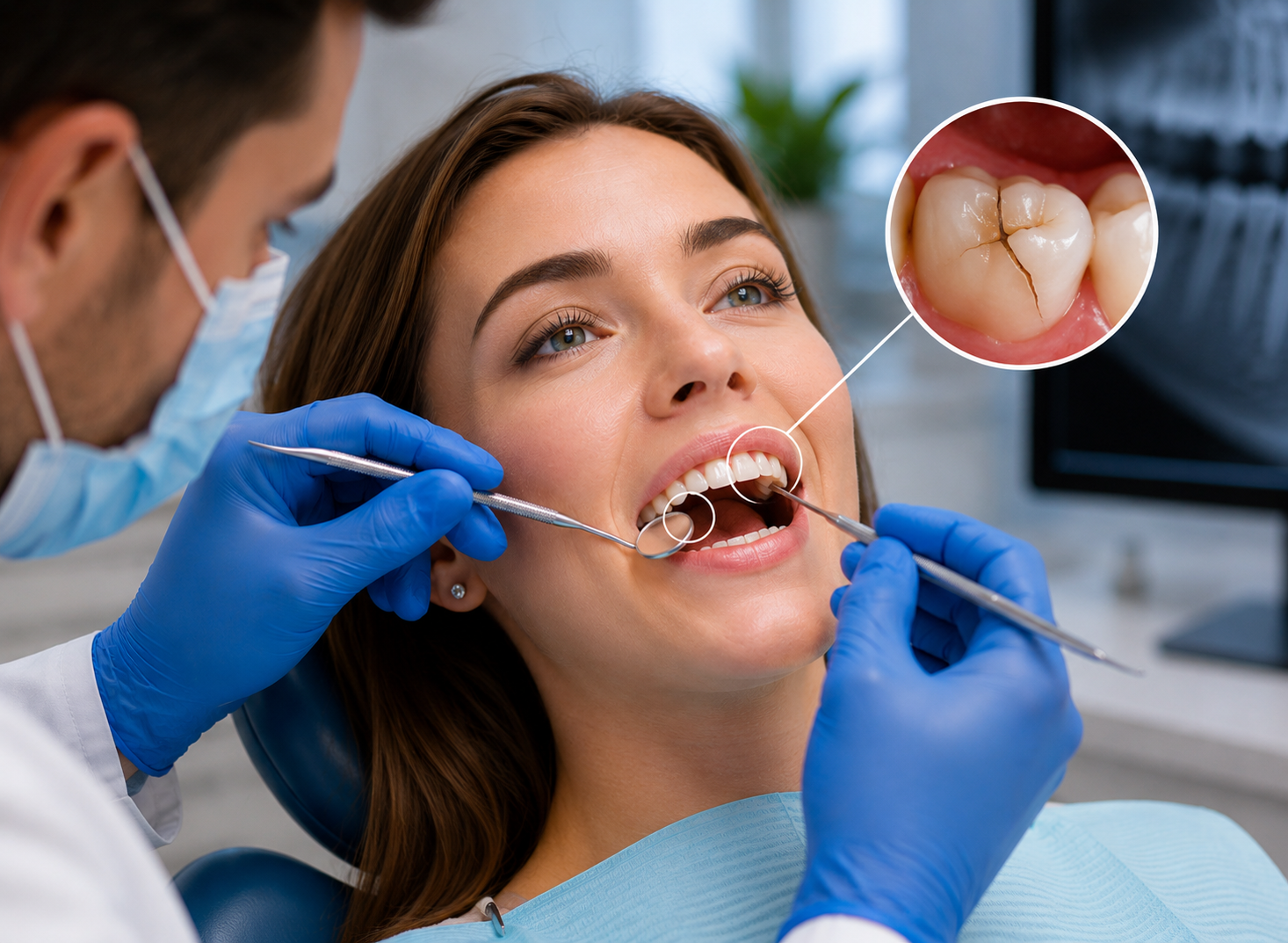
Teeth can develop tiny cracks due to grinding, stress, or normal wear. When sugar gets into these cracks, pain or sensitivity can occur quickly.
Sensitivity or Cavity? How to Tell the Difference
Here is a simple comparison to help you determine what type of issue you may be experiencing:
| If the pain fades quickly | If the pain lasts or throbs |
| More likely general sensitivity | Could indicate a cavity or decay |
| Triggered by sweets across multiple teeth | Usually isolated to one specific tooth |
| Pain is mild or brief | Pain becomes deeper or persists |
If your sensitivity is worsening or concentrated in one area, it is important to have it checked.
What You Can Try at Home
There are steps you can take at home that may reduce sensitivity:
- Brush with a fluoride toothpaste to strengthen enamel
- Try sensitivity toothpaste with ingredients like potassium nitrate
- Switch to a soft-bristle toothbrush to protect gum tissue
- Rinse your mouth after eating sweets, especially sticky ones
- Avoid brushing immediately after consuming acidic or sugary foods
These habits can make a difference, but if sensitivity continues, there is usually an underlying reason that needs professional evaluation.
What Happens When We Check Tooth Sensitivity in Our Office
As a dentist serving in Sugar Land, we begin with a gentle examination and ask questions about what the patient is experiencing. We would like to know when the discomfort began, whether it affects one tooth or several, and how intense the sensation is. This helps us narrow down the cause before we even begin our clinical evaluation.
During the exam, we look for the most common issues that lead to sweet sensitivity, such as:
- Enamel that is thinning, weakened, or worn down
- Early cavities that may not be visible to the eye yet
- Gum recession that exposes the root surface
- Small cracks or bite wear that could be irritating the nerve
At Avalon Dental Group, our approach is simple. We diagnose the cause of the pain, explain your options clearly, and recommend the least invasive solution that will protect the tooth. Our focus is always on long-term oral health and patient comfort.
When You Should See a Dentist
It is time to schedule an appointment if:
- Pain happens every time you eat sweets
- Sensitivity is getting worse instead of fading
- Pain is concentrated in one tooth or one area
- You notice discoloration, small dark spots, or tiny pits on the tooth
Sensitivity is a sign that something is changing in the tooth. Pain is the next stage, and that is your body’s way of asking for attention.
Your Next Step
If your teeth hurt when you eat sweets, it is a sign that something is changing beneath the surface. Addressing the issue early can help prevent more complex treatment later and protect your long-term oral health.
We are located on Williams Trace Blvd in Sugarland and proudly serve patients from nearby communities.
Contact us to schedule your visit. Our team would be honored to care for you.
Final Thoughts
Tooth sensitivity to sweets may feel minor or inconvenient, but it is almost always an early warning sign of enamel erosion, gum changes, or even the formation of a small cavity. Addressing it early helps you protect your smile and avoid more extensive treatment later.
Being proactive with your oral health now can make all the difference in the future.
Frequently Asked Questions
1. Does sweet sensitivity always mean I have a cavity?
Not always. It can also be caused by enamel erosion or gum recession. However, sensitivity to sugar is one of the earliest signs that enamel may be compromised.
2. Can sensitivity go away on its own?
Sometimes, especially if it is a temporary irritation, but if sensitivity lasts longer than a week or two, it is advisable to have it evaluated.
3. Why do sweets make my teeth hurt but not hot or cold foods?
Different triggers affect different parts of the tooth. Sugar can travel into dentin pathways without changing temperature.
4. Is sensitive toothpaste safe for daily use?
Yes. Daily consistent use is what makes sensitive toothpaste effective.
5. How do dentists fix sweet sensitivity?
Treatments vary depending on the cause and may include fluoride treatment, remineralizing therapy, or a small filling if a cavity is present.